
AudioScribe
AI Transcription Tool
AudioScribe revolutionizes transcription with the world's first end-to-end workflow platform
- Pricing
- Freemium
- Category
- Transcription
- Listed
- Jan 8, 2026
- Updated
- May 25, 2026
Promoted
 Sidrune AI85% off. Stable Claude API for agent developers. Pay as you go. Invoices & refunds available.
 Pixmax.aiPixmax.ai is an all-in-one AI workspace for videos, visual stories, and marketing content.
 SEOify - Improve your SEO & rankingsBuild links to rank in Google. Improve your DR with links you can start building now.Advertise here270,000+ people visit Dang.ai every month.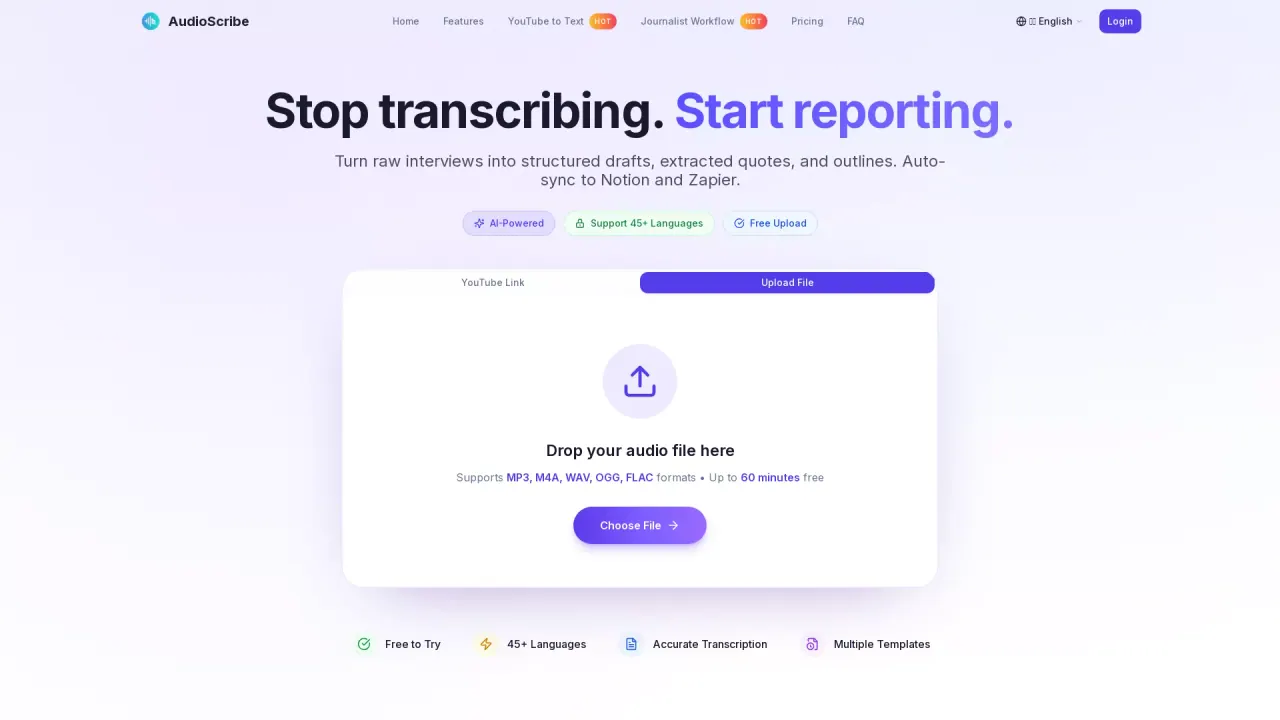
What does AudioScribe do?
What is the main use case for AudioScribe?
AudioScribe combines accurate multi-language transcription with 12 specialized AI summary templates covering everything from Interview Briefs to Sales Call Analysis to Meeting Notes. The platform uniquely offers one-click workflow automation to Notion and 5,000+ apps via Zapier—something competitors like Otter.ai, TurboScribe, and Happy Scribe don't provide.
Who is the target audience of audioscribe.org?
Perfect For
- **Journalists** turning interviews into publication-ready articles
- **Sales Teams** tracking deal conversations with MEDDICC analysis
- **Researchers** analyzing focus groups and interviews
- **Content Creators** repurposing podcast episodes with structured insights
Can a user use AudioScribe for free?
Generous Free Trial
- **2 full transcriptions** (up to 60 minutes each)
- **3 AI summaries** with access to General and Meeting Notes templates
- No credit card required
How does AudioScribe ensure fast and accurate transcription?
AudioScribe speeds up the transcription process by allowing users to transcribe audio files in minutes with 99% accuracy. The AI is designed to handle various accents, background noises, and multiple speakers effectively, ensuring reliable and fast results for professionals who depend on precise data for timely reporting.
What languages and formats does AudioScribe support for transcription?
AudioScribe supports transcription in over 45 languages. Users can upload audio files in MP3, M4A, WAV, OGG, and FLAC formats, making it a versatile tool for professionals needing to work with multiple file types. Each user can try the service for free with upload limits of up to 60 minutes.
How can AudioScribe help journalists streamline their workflow?
AudioScribe aids journalists by providing smart AI summaries that automatically turn audio interviews into structured drafts using nine different templates, such as 'Interview Brief' and 'Article Outline'. The tool also offers direct integration with Notion and Zapier, automating workflows like sending drafts to editorial teams or publishing platforms, thus significantly reducing the workload and time involved in creating publish-ready content.
This listing is claimed
Own AudioScribe? Sign in with the email used to claim it to manage this listing, or upgrade to Pro for featured-first placement and a newsletter feature.