
Antimetal
AI Cloud Savings
Automate cloud savings with Antimetal's AI tools. Save up to 75% on your AWS bill effortlessly and risk-free. #AI #CloudSavings
Promoted
 Sidrune AI85% off. Stable Claude API for agent developers. Pay as you go. Invoices & refunds available.
 Pixmax.aiPixmax.ai is an all-in-one AI workspace for videos, visual stories, and marketing content.
 RewindType any X/Twitter handle. Get their year back as a narrated video story. Then ask it anything.
 KurodyneSell the tools from your AI side projects. Listing is free.
 SEOify - Improve your SEO & rankingsBuild links to rank in Google. Improve your DR with links you can start building now.Advertise here270,000+ people visit Dang.ai every month.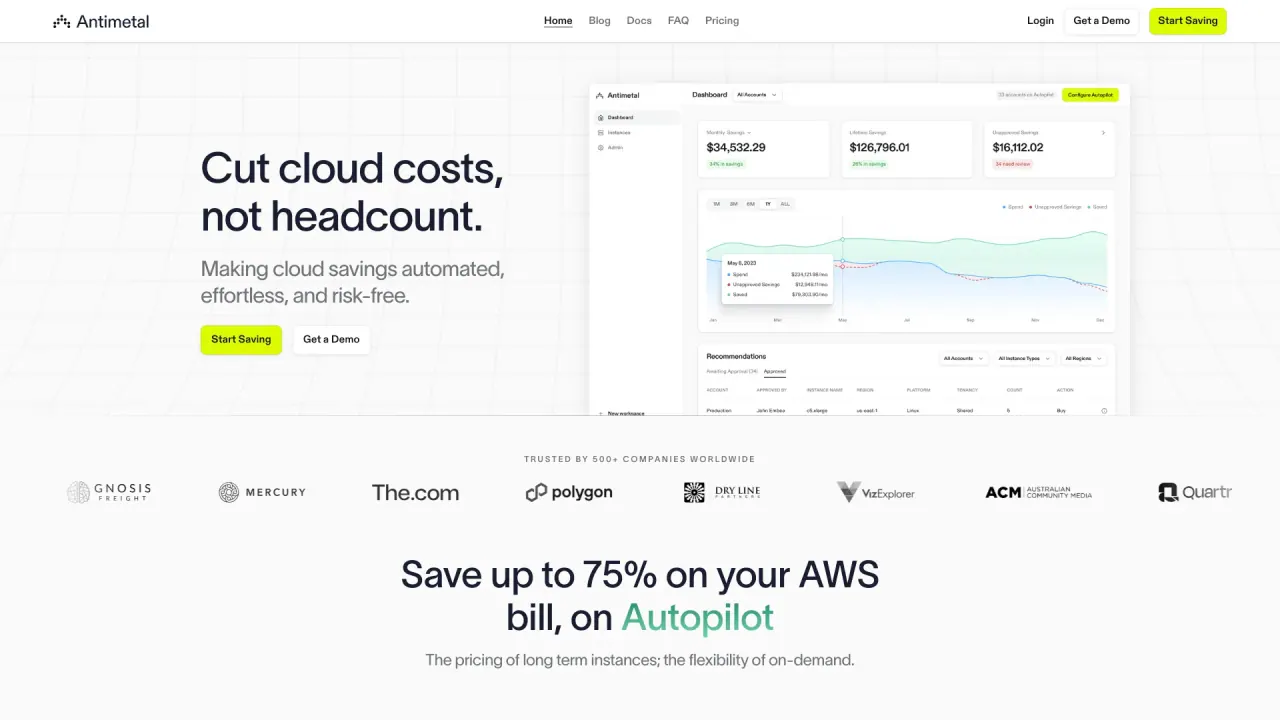
What does Antimetal do?
What is Antimetal focused on?
Antimetal is built to help teams rethink infrastructure, reduce maintenance headaches, and keep applications fast and reliable, especially during high‑traffic periods.
What deployment safeguards does Antimetal provide?
Antimetal blocks deployments with uncached API calls and requires load testing in CI for components that fetch user data on render, helping prevent rollout-related instability.
How does Antimetal reduce load and improve performance?
- Cache timezone lookups to reduce API and database load instantly.
- Introduce a fallback timezone to quickly stabilize the experience if caching rollout faces delays.
- Apply preload and caching safeguards for metadata endpoints tied to userID, ensuring related calls are preloaded or deduplicated (for example, /timezone).
What is the preload and deduping approach for userID-bound endpoints?
Historically, any API call tied to a userID is preloaded or deduped to minimize duplicate work and improve performance. The /timezone endpoint is cited as fitting this pattern.
How does Antimetal handle rollback and deployment improvements after incidents?
Antimetal supports rolling back changes and adding a batch endpoint to prevent overload from unbatched requests. This approach was highlighted in a past incident involving unbatched user profile fetches that overloaded the API and were resolved by such measures.
What is Antimetal's focus during high-traffic periods?
The team prioritizes latency and keeping the UI responsive, ensuring a smooth user experience even under heavy load.
Has Antimetal discussed notable incidents and their mitigations?
Yes. For example, a deployment (v2.6.1) introduced uncached timezone lookups that caused exponential DB load and latency spikes. Mitigations included caching timezone lookups, adding a fallback timezone, and other safeguards to restore stability.
Where can I learn more about Antimetal or get access?
The site highlights sections like Blog, Careers, and Get access for more information and access options. These sections are the recommended starting points for updates and onboarding.
Is this your tool?
Claim Antimetal to manage this listing, or upgrade to Pro for featured-first placement and a newsletter feature.