
What Brand Is This
AI Detector & Detecting Tools
What Brand Is This - Logo & Brand Identifier by Photo
- Pricing
- Free
- Category
- AI Detector
- Listed
- Nov 14, 2026
- Updated
- Nov 14, 2026
Promoted
 RewindType any X/Twitter handle. Get their year back as a narrated video story. Then ask it anything.
 KurodyneSell the tools from your AI side projects. Listing is free.
 Pixmax.aiPixmax.ai is an all-in-one AI workspace for videos, visual stories, and marketing content.
 AI Checker PlusAI detector that highlights which passages AI wrote. Free check, no sign-up. Plagiarism too.
 SEOify - Improve your SEO & rankingsBuild links to rank in Google. Improve your DR with links you can start building now.Advertise here330,000+ people visit Dang.ai every month.
What does What Brand Is This do?
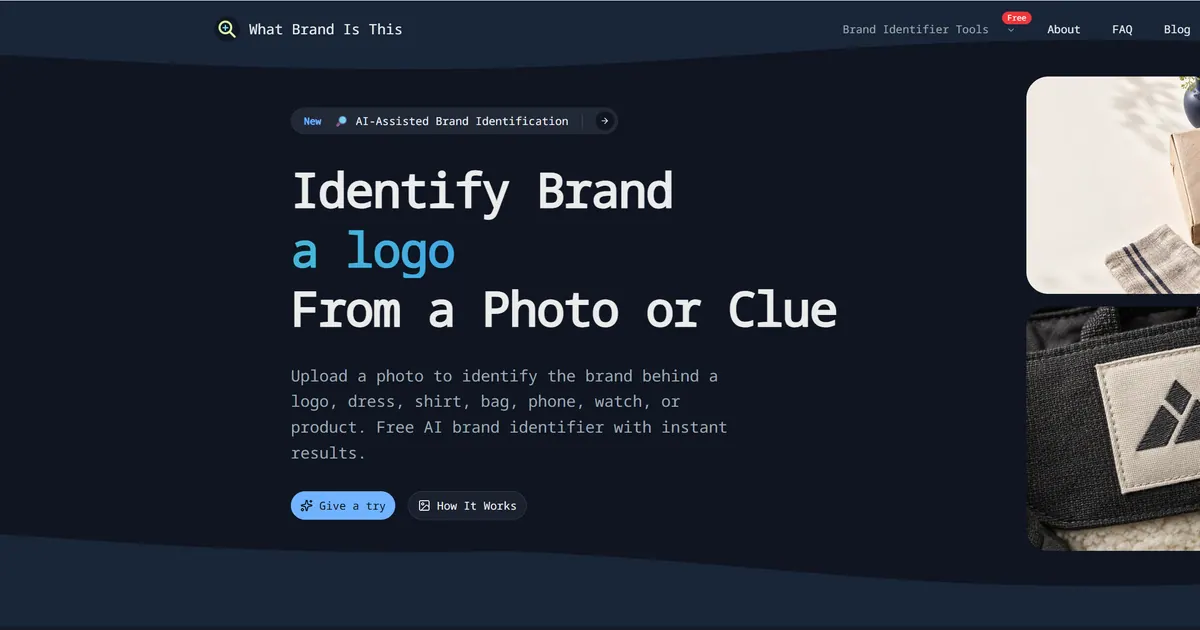
[what brand is this] is a practical starting point when a product is familiar enough to describe but its maker is unknown. A shopper may have a jacket with a worn label, a bag with an unfamiliar emblem, a package photographed on a trip, or a logo seen briefly on a screen. The site brings those fragments into a focused brand-identification workflow. Users can begin with a photograph or ordinary language, compare plausible brands, and follow the evidence toward a better-supported answer.
The general identifier is designed around the clues people actually have. A useful description might mention three visible letters, a geometric symbol, a distinctive color combination, the object's material, or the place where it was found. Someone without a photograph can describe those details directly. Someone with an image can add information the camera does not show, such as the approximate era, country, product category, or context of a secondhand listing. These observations help narrow the search without requiring the user to know a brand name.
Results are presented as possible matches rather than an unexplained verdict. The core workflow can return up to three candidates with reasons for the match, visible traits to compare, and notes about uncertainty. Public reference information may help the user recognize a brand or continue researching it, although every candidate will not necessarily have complete images or reference details. A useful result identifies what fits, what remains unclear, and which additional observation could separate similar-looking possibilities.
The site's focused logo tool suits cases where the mark itself is the clearest evidence. It accepts a photo or written account of a symbol, wordmark, emblem, or app icon. Letter shapes, spacing, the structure of the symbol, and its position on the object can be more informative than a general impression of the design. Users are encouraged to include the surrounding context because a simple shape may appear in unrelated industries or be part of a product decoration rather than its maker's logo.
The clothing workflow looks beyond the mark. A garment can carry several independent clues in its main label, care tag, buttons, zipper pulls, fabric, seams, and overall silhouette. Shirts, dresses, jackets, hoodies, and jeans can be investigated through the same clothing-brand page, with examples that explain how evidence differs between them. A printed graphic on the front may identify a collaboration or decorative design; the neck label and construction may tell a different story about who produced the garment.
Specialist guides make that comparison process more useful. Clothing-label identification explains how to record exact wording, preserve uncertain letters, and compare main, size, and care labels. Bag identification focuses on embossing, lining labels, hardware, stitching, materials, and shape. Shoe identification draws attention to the tongue, heel, sole, and relationship between a mark and the shoe's construction. These guides connect to identification workflows and provide examples of the evidence needed, so each category offers more than a different heading over the same question.
A secondhand shopper can use the site before deciding what to research next. For example, an unfamiliar purse may have an embossed symbol and two readable letters on an interior label. The user can compare the candidate brands with both clues instead of assuming the symbol settles the matter. A collector investigating older clothing can add its suspected decade and country, then consult archive or official-source material when the shortlist suggests a promising lead. The same process helps ordinary users identify packaging or products without turning the tool into a general shopping catalog.
The photo itself matters. A sharp, evenly lit crop of a useful detail is usually easier to compare than a distant image containing many objects. A second photograph may reveal another mark or label that contradicts the first guess. Reflections, damaged text, mirrored lettering, and photographs copied from listings can all complicate the evidence. The guides help users distinguish what is directly visible from what they merely expect to see, and encourage another observation when the initial result is too broad.
Brand identification and authentication require different evidence. A logo resemblance cannot establish that an item is genuine, determine its value, prove trademark ownership, or guarantee that a seller is legitimate. The site's candidates are research leads. If an identification affects a purchase, resale, licensing question, or dispute, users should check reliable independent sources and seek the appropriate specialist judgment. This makes the tool useful for narrowing a question while keeping the final decision tied to evidence the user can inspect.
What Brand Is This is free to use in a browser, with no account required for core identification. Its strongest directory fit is an AI-assisted brand, logo, and fashion-identification resource. The value comes from connecting an accessible input workflow with explanations and category-specific comparison guides. Instead of demanding perfect information, it helps users preserve the clues they have, compare plausible names, and collect the next detail that makes the search more reliable.
This listing is claimed
Own What Brand Is This? Sign in with the email used to claim it to manage this listing, or upgrade to Pro for featured-first placement and a newsletter feature.