
Ottermind
Verified
AI Assistant Tools
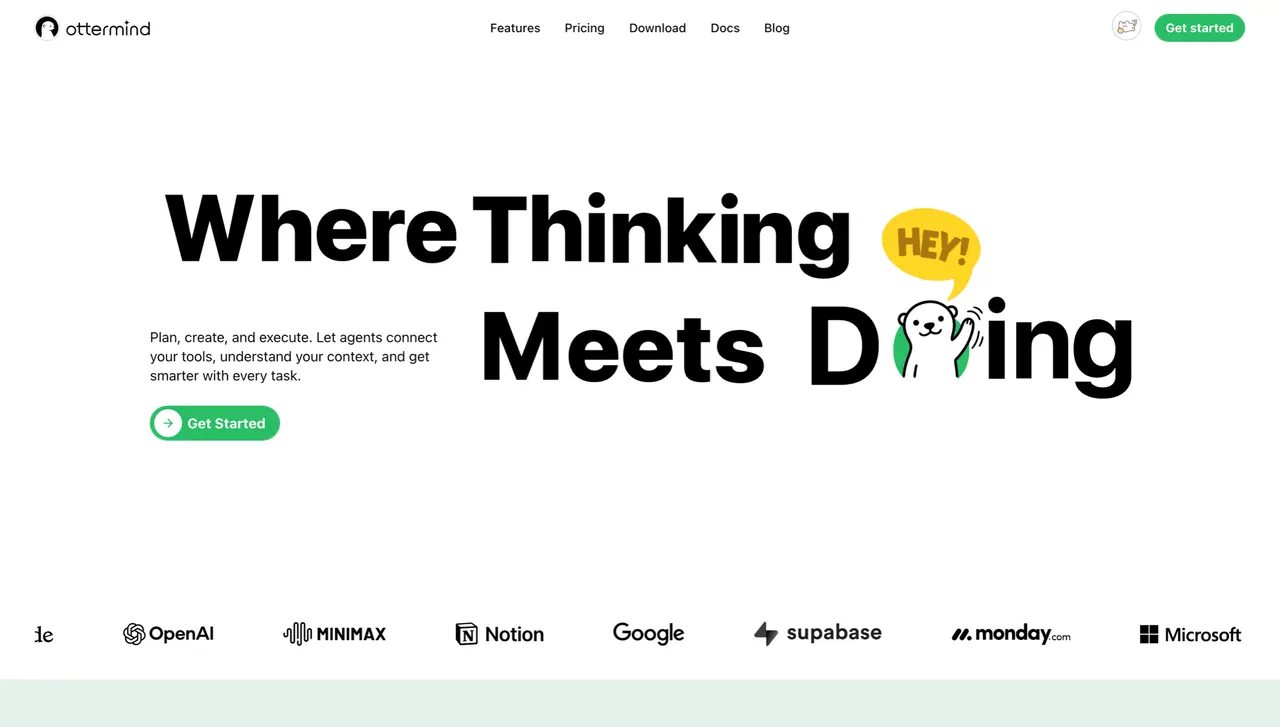
Ottermind is an execution-first AI agent workspace that turns your goals and files into finished work.
- Category
- Assistant
- Listed
- Aug 11, 2026
- Updated
- Aug 12, 2026
What does Ottermind do?
Ottermind is an AI agent workspace built for real work, bridging the gap between thinking and doing. You describe a goal, and Ottermind helps plan the steps, coordinate execution, and deliver complete results.
It retains project context so files, decisions, and history stay organized around each project rather than getting lost in a chat thread. Agents can connect to your tools and operate directly across docs, code environments, plugins, and connected services to move tasks forward step by step.
Ottermind is designed to adapt to you through ongoing collaboration and to support long-running work that can start on a phone and continue on desktop (including running autonomously in the cloud). Common use cases include creating slides and visuals, summarizing files, analyzing spreadsheets, generating video, and building websites.
What is Ottermind used for?
Ottermind helps turn goals, files, and workflows into finished work. It supports tasks like creating slides and visuals, summarizing documents, analyzing spreadsheets, creating video, and building websites.
How does Ottermind differ from a standard chatbot?
Instead of only answering questions, Ottermind retains project memory, orchestrates agents, and carries tasks across steps toward a finished result.
Does Ottermind keep my project context?
Yes. It keeps files, decisions, and history organized around each project, helping you maintain continuity across tasks.
Can Ottermind work with my files and tools?
Yes. Agents can work directly with your docs, code environments, plugins, and connected services to complete tasks.
Does Ottermind learn from how I work?
Yes. Ottermind adapts as you work by learning your preferences, recurring patterns, decisions, and feedback so future tasks can start with more context.
What happens if an agent encounters an error?
Ottermind is built for resilience: if an agent hits an error, it can inspect logs, adjust its approach, and try to recover. Visible work and critical actions require your approval.
Is this your tool?
Upgrade Ottermind to Pro for featured-first placement, a newsletter feature and ongoing listing management.