
AI Plant Identifier
AI Detector & Detecting Tools
What Plant Is This - Plant Identifier by Photo & Description
- Pricing
- Free
- Category
- AI Detector
- Listed
- Nov 14, 2026
- Updated
- Nov 14, 2026
Promoted
 RewindType any X/Twitter handle. Get their year back as a narrated video story. Then ask it anything.
 KurodyneSell the tools from your AI side projects. Listing is free.
 Pixmax.aiPixmax.ai is an all-in-one AI workspace for videos, visual stories, and marketing content.
 AI Checker PlusAI detector that highlights which passages AI wrote. Free check, no sign-up. Plagiarism too.
 SEOify - Improve your SEO & rankingsBuild links to rank in Google. Improve your DR with links you can start building now.Advertise here330,000+ people visit Dang.ai every month.
What does AI Plant Identifier do?
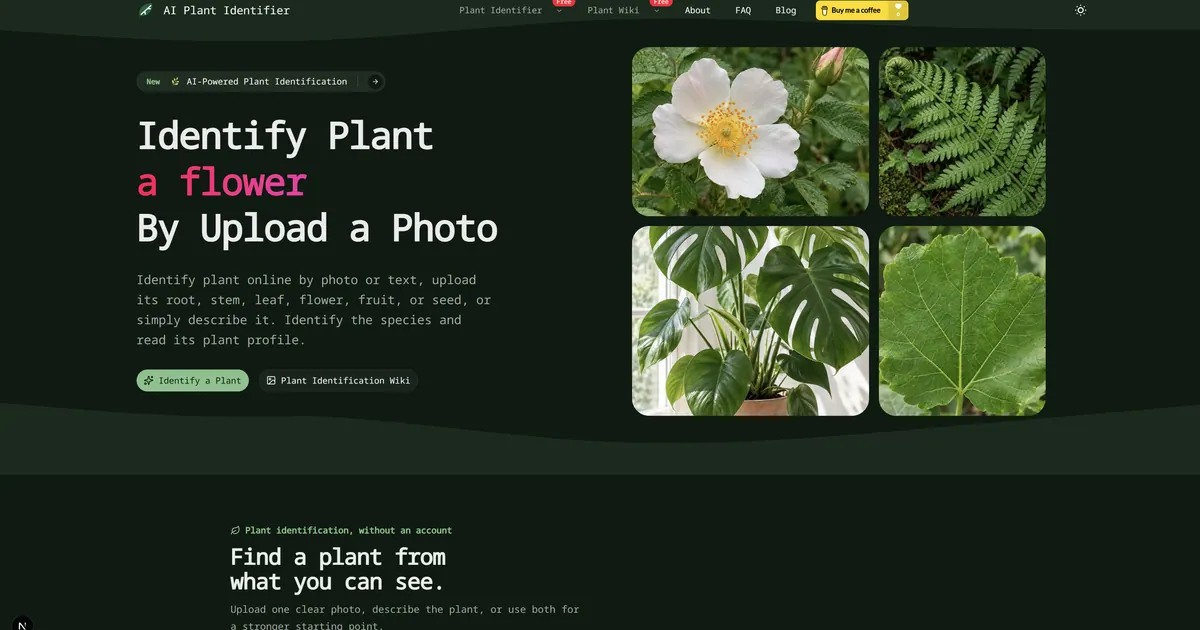
[plant identifier online] helps users investigate an unfamiliar plant from the evidence they already have. That evidence may be a photograph of a potted plant, a flower seen beside a path, a distinctive leaf, or a written memory of something growing in a garden. The site combines image and description workflows with guides to visible plant traits. It offers possible names, comparison clues, and reference information so users can move from an initial observation toward a more useful botanical question.
The photo workflow starts with a clear image and an optional field note. A close view of a leaf, flower, stem, fruit, or other useful feature can provide stronger evidence than a distant landscape. Notes about season, broad location, habitat, or the plant's overall size may add information that the image does not show. Users can submit common image formats through their browser and compare the results without installing a native application. The emphasis is on useful evidence rather than a perfect photograph.
A separate description workflow helps when no photo is available. Users can describe leaves or needles, flowers or fruit, growth form, bark, habitat, and season in ordinary language. A waist-high plant with narrow silver leaves and purple flowers beside a dry path gives the search several observations to compare. A vague description such as a green plant leaves many more possibilities. The guide helps users collect independent traits and separate uncertain memories from details they clearly observed.
The core identifier can return up to three plausible matches with common and scientific names where the evidence supports them. Match reasons explain which visible or supplied traits matter, and uncertainty notes show when a proposed name remains weak. Public botanical data can add family, genus, images, or links when available. These reference details may be incomplete, so the user is still encouraged to compare the suggested plant with a trusted field guide or another suitable botanical source.
Focused guides connect the general workflow with recurring identification problems. Houseplant identification compares leaf arrangements, texture, stems, and growth habits common in indoor collections. Succulent identification examines fleshy leaves, rosettes, branching, spines, and other visible traits. Flower identification uses illustrated flower shapes together with leaves, season, and habitat. Leaf and tree guides connect close-up observations with the wider plant. Each guide helps users choose evidence and compare candidates rather than offering a different promise of certainty.
The houseplant route is useful when a gift or purchase arrives without a reliable label. A pot and room setting may suggest an indoor plant, but they do not establish its species. The succulent route explains why a rosette shape alone can be misleading and why a genus-level result may be more realistic than an exact cultivar. The flower guide shows why color is only one clue. These distinctions make the resource more useful for naming and comparison than a collection of loosely related upload forms.
Leaf identification requires attention to the relationship between the leaf and the plant. Shape, margins, veins, and texture can help, but a detached leaf may hide whether leaves are opposite, alternate, or part of a compound structure. Tree identification benefits from a whole-tree view, branch detail, bark, and broad geographic context. The guides encourage another observation when one feature is insufficient. A proposed name can then be checked against several characteristics rather than accepted because a reference photograph looks roughly similar.
The site also supports learning through the search process. A curious gardener can begin with ordinary language, see which traits distinguish the candidates, and return to the plant with a better question. Someone who remembers a flowering shrub from a walk can use description mode to decide what to photograph on the next visit. Plant owners can compare tentative names before consulting a botanical reference. The practical value is helping users observe more carefully, including when the first shortlist remains uncertain.
Identification results do not establish edibility, toxicity, disease status, medicinal use, or suitability for a particular person or animal. Those questions need their own reliable evidence and, where appropriate, qualified advice. A brief note associated with a candidate is also not a complete care plan. The site focuses on plausible plant names and comparison traits. For consequential decisions, users should confirm the identification independently instead of treating image similarity or an AI confidence score as a final botanical determination.
AIPlantIdentifier is free to use in a browser, with no account or payment required for the core workflow. It fits AI-tool, gardening, nature-learning, and plant-resource directories. Its defining strength is the connection between accessible inputs and practical comparison guidance. Users can start with a photo or memory, investigate possible names, understand why several plants may fit, and collect the next useful feature. The result is a clearer research path that keeps observation and verification at the center of plant identification.
This listing is claimed
Own AI Plant Identifier? Sign in with the email used to claim it to manage this listing, or upgrade to Pro for featured-first placement and a newsletter feature.