
Sumly
Analytics AI Tools
Sumly puts visitors, app installs, and revenue attribution from many sources into one EU-hosted screen for all your projects.
- Pricing
- Free trial
- Category
- Analytics
- Listed
- Nov 29, 2026
- Updated
- Nov 29, 2026
Promoted
 MuzieCreate professional AI music videos starring you. Bring a song or make one, done in minutes.
 AI Checker PlusAI detector that highlights which passages AI wrote. Free check, no sign-up. Plagiarism too.
 Pixmax.aiPixmax.ai is an all-in-one AI workspace for videos, visual stories, and marketing content.
 AdsfieldPro ads from one product photo — $40/year
 SEOify - Improve your SEO & rankingsBuild links to rank in Google. Improve your DR with links you can start building now.Advertise here330,000+ people visit Dang.ai every month.
What does Sumly do?
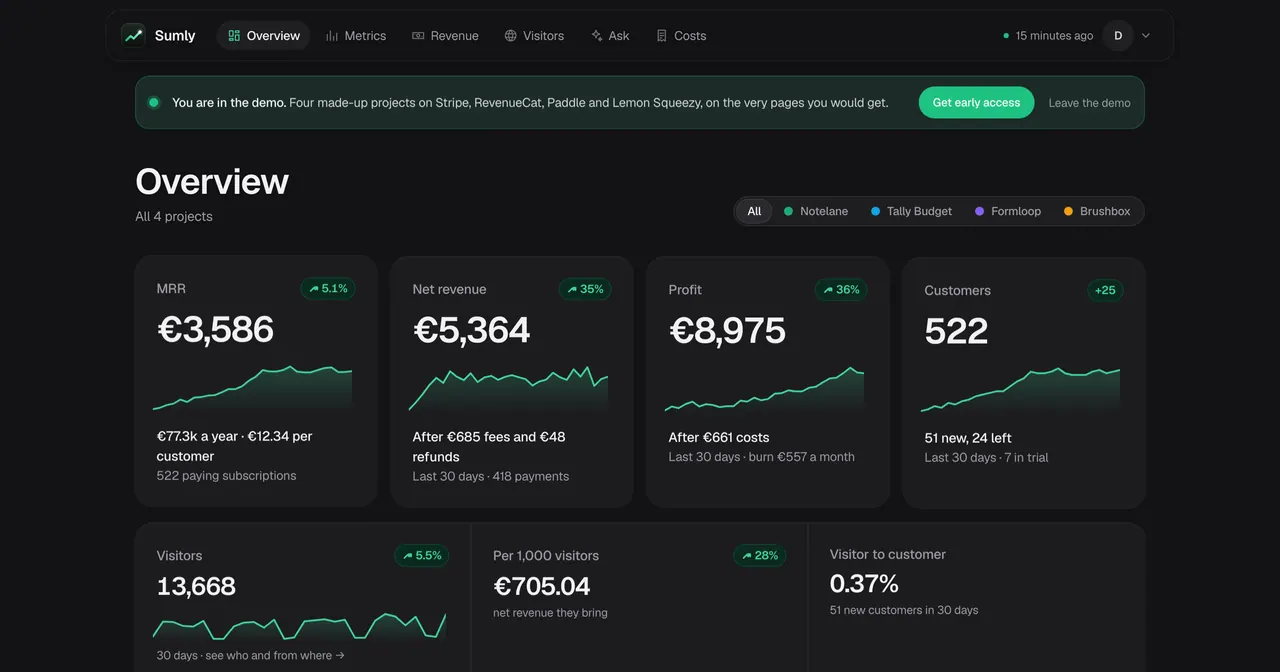
Sumly shows every project’s visitors and revenue on one screen—so you can see not just what happened, but what brought paying customers. It can read Stripe, Paddle, Polar, Creem, RevenueCat, App Store, Google Play and more, then combines them into totals like MRR, revenue, and customers across multiple projects.
For traffic, Sumly uses a one-line script to count visitors without storing IP addresses. You can track where people came from (such as search, ads, social, and direct), and use attribution approaches like first touch, last touch, or linear attribution. If your buyers come from app stores, Sumly ties store button taps to subsequent installs so app revenue can still be connected to its source.
Sumly also adds a “why” layer. You’ll see heatmaps for pages and app screens, along with clicks that lead to payments. Smart bot blocking helps keep scrapers from inflating visitor counts by blocking attack traffic where your site is served (with Cloudflare, bunny.net, Vercel, or your own server rules). It can also mark brand mentions on your traffic chart, so revenue changes show alongside the mentions that drove traffic.
It’s built for indie makers, SaaS founders, and app developers with more than one project. Plans include a free tier and paid options with unlimited projects on every plan; you also get a 14-day free trial on paid plans with no card. The free tier is free until your first $1k MRR, and there’s a 14-day paid trial available to try features before committing.
What does Sumly track for my projects?
Sumly tracks visitors and revenue together, pulling data from websites and apps plus payment providers and stores. It also includes heatmaps, smart bot blocking, and brand-mention signals alongside traffic and sales.
How does Sumly count visitors without storing IP addresses?
Sumly uses a one-line script to count visitors while avoiding IP address storage. Location can be derived at the country/city level from the request, and it avoids keeping raw addresses.
Which payment and app sources can Sumly connect to?
Sumly can read multiple payment providers and app stores such as Stripe, Paddle, RevenueCat, App Store, and Google Play, plus other listed providers. It aggregates them into unified revenue metrics across your projects.
How does Sumly attribute revenue to the right visitor source?
Sumly ties payments back to the visit that led to them, then shows what each source brought in. You can follow a buyer from first visit to payment and use attribution options like first touch, last touch, or linear.
Does Sumly help prevent bots from inflating my visitor metrics?
Yes. Sumly includes smart bot filtering that blocks scrapers where your site is served (including Cloudflare, bunny.net, Vercel, or rules for your own server). This helps keep bots from counting as visitors.
What are Sumly’s free trial and pricing rules?
You can start free with no card, free until your first $1k MRR. Paid plans include a 14-day free trial with no card, and each paid plan includes unlimited projects.
This listing is claimed
Own Sumly? Sign in with the email used to claim it to manage this listing, or upgrade to Pro for featured-first placement and a newsletter feature.