
ShipFit AI
AI Development Tools
ShipFit AI turns a vague product idea into a ship-ready playbook with 9 guided decisions, proven frameworks, and exportable configs for AI coding tools.
- Pricing
- Free
- Category
- Development
- Listed
- Aug 20, 2026
- Updated
- Aug 22, 2026
Promoted
 Sidrune AI85% off. Stable Claude API for agent developers. Pay as you go. Invoices & refunds available.
 Pixmax.aiPixmax.ai is an all-in-one AI workspace for videos, visual stories, and marketing content.
 SEOify - Improve your SEO & rankingsBuild links to rank in Google. Improve your DR with links you can start building now.Advertise here270,000+ people visit Dang.ai every month.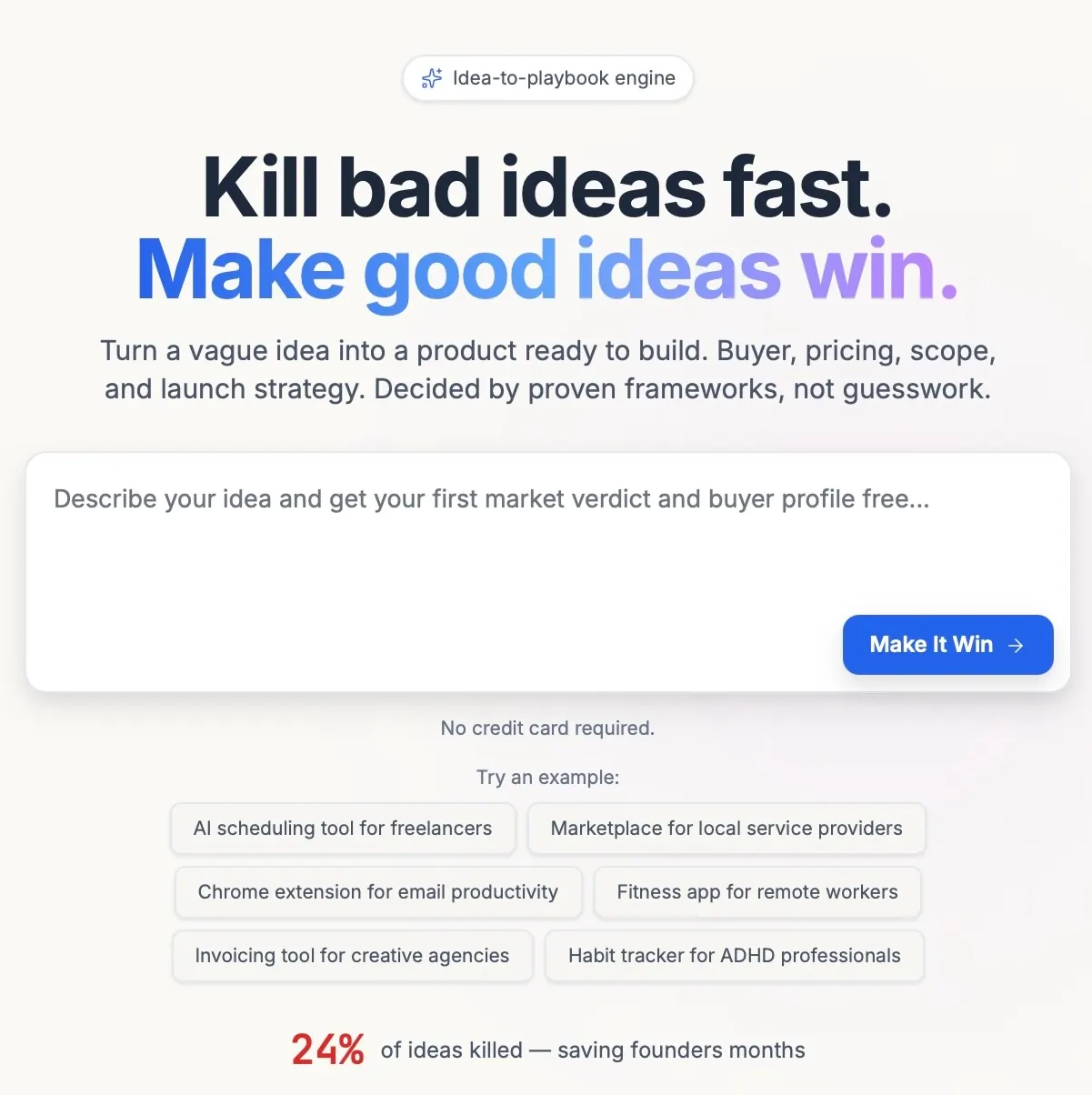
What does ShipFit AI do?
ShipFit AI is the “idea-to-playbook” decision engine that helps you go from a single sentence to a product worth building. You work through 9 sequential decisions—market validation, buyer, pain ranking, competitive angle, MVP scope, pricing architecture, demand proof, launch plan, and build-ready exports.
Instead of fuzzy brainstorming, ShipFit guides you using proven frameworks mapped to startup stages, with real market evidence (competitors, pricing sources, and review-based complaints). You’ll end with a kill/pivot/proceed verdict plus the concrete outputs founders need to build confidently: buyer profile, pricing, scope, and a launch plan.
When you’re ready, export “vibe code” files for AI coding environments like Cursor, Claude Code, and more—so your next step is copy/paste and build, not guesswork.
What does ShipFit AI produce after I enter my idea?
You’ll get a ship-ready playbook with a market verdict (kill/pivot/proceed) and the key outputs for building: buyer, pricing, MVP scope, launch plan, and build-ready configurations.
Is ShipFit AI just a chatbot that gives general advice?
No—ShipFit runs a fixed, non-skippable process of 9 decisions in order. Each decision is contextual to your idea, buyer, and market.
How does ShipFit AI validate my market and competition?
It uses proven startup frameworks and relies on real market evidence such as competitor websites, pricing sources, and review-based complaints.
What are the 9 decisions in the playbook?
Validate the market; know your buyer; rank the pain; pick your angle; scope ruthlessly for V1; price with data; prove demand; plan the launch; and export and build.
Do I need a credit card to try ShipFit AI?
No credit card is required to start. You can begin with the listed $5 Taster Pack.
Can ShipFit AI export files for AI coding tools?
Yes. You can export “vibe code” and config files such as .cursorrules, CLAUDE.md, and other tool-optimized files for multiple AI coding environments.
This listing is claimed
Own ShipFit AI? Sign in with the email used to claim it to manage this listing, or upgrade to Pro for featured-first placement and a newsletter feature.