
Face Finder
Research AI Tools
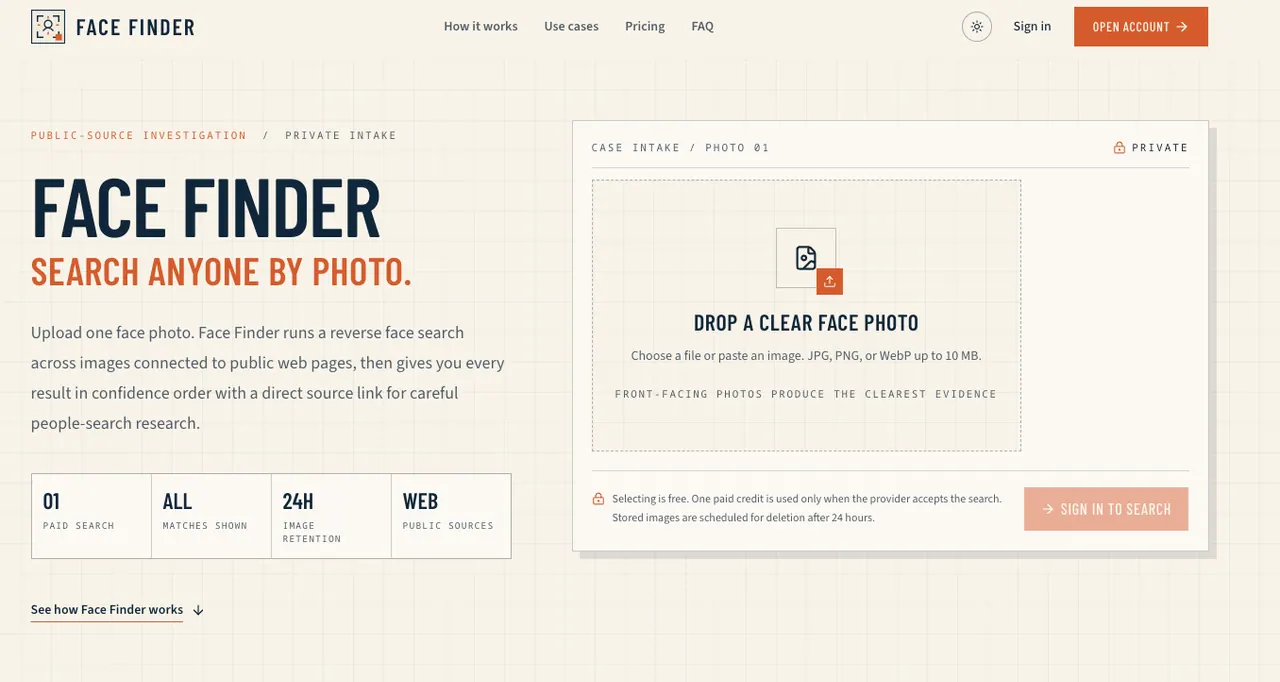
Face Finder is a paid reverse face search that uploads a front-facing photo and returns confidence-ordered matches with direct public source links.
- Pricing
- Free
- Category
- Research
- Listed
- Jul 26, 2026
- Updated
- Jul 27, 2026
What does Face Finder do?
Face Finder helps you trace a person’s visual matches by uploading a clear, front-facing photo. The tool runs a reverse face search across images connected to public web pages, then presents every returned match in confidence order.
Each result includes a direct source link so you can open the surrounding page context yourself. Use the confidence score as a similarity indicator—not as an automatic identity decision or proof of who the person is.
For best review quality, compare stable facial details first and read the page context (domain, caption, posting date, and whether the page appears original or copied). Face Finder also includes a 24-hour image retention window for stored images after a paid search begins.
What is a Face Finder reverse face search?
It’s a private, photo-based search that finds visually similar faces across images linked to public web pages and returns a confidence-ordered evidence-style report with direct source links.
Do I need to create an account to upload a photo?
You can prepare your image before creating an account, but to start a paid search you need to sign in.
How are the results ordered?
Matches are sorted from highest to lowest visual similarity using a confidence score. There is no confidence filter that hides lower-ranked matches from your report.
What happens to my uploaded photo?
After a paid search starts, stored images are scheduled for deletion after 24 hours as part of the tool’s retention lifecycle.
If a search fails, do I lose a credit?
No. If the provider rejects or times out and a search cannot start, the credit is returned automatically.
How should I interpret the confidence score?
The confidence score measures visual similarity only. Review the face and open the associated source page to assess context and consistency across multiple public mentions before drawing conclusions.
Is this your tool?
Upgrade Face Finder to Pro for featured-first placement, a newsletter feature and ongoing listing management.