
GeneraiveUI
UI Design Automation
AI-crafted interactive experiences, generated instantly from any prompt.
Promoted
 KurodyneSell the tools from your AI side projects. Listing is free.
 Sidrune AI85% off. Stable Claude API for agent developers. Pay as you go. Invoices & refunds available.
 Pixmax.aiPixmax.ai is an all-in-one AI workspace for videos, visual stories, and marketing content.
 RewindType any X/Twitter handle. Get their year back as a narrated video story. Then ask it anything.
 SEOify - Improve your SEO & rankingsBuild links to rank in Google. Improve your DR with links you can start building now.Advertise here270,000+ people visit Dang.ai every month.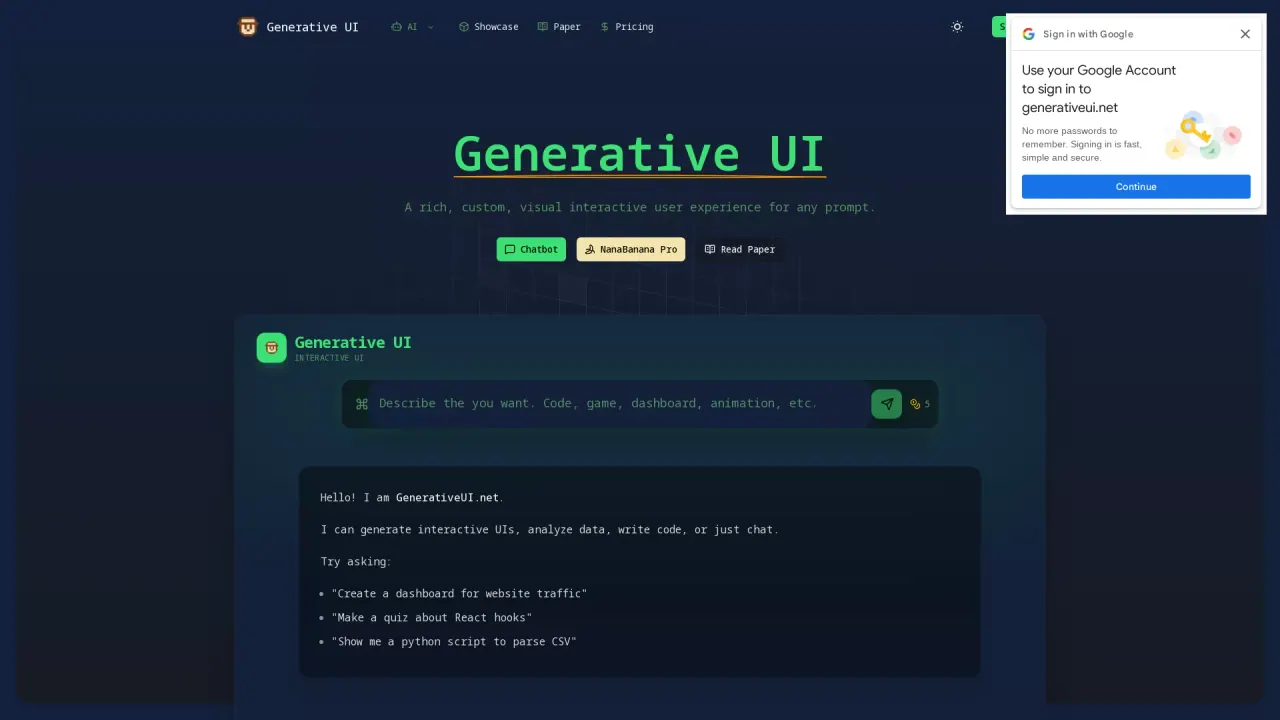
What does GeneraiveUI do?
What is the main use case for Generaive UI?
Building dashboards on demand Creating interactive learning modules Generating quick prototypes and apps Producing visual storytelling experiences Running simulations or data exploration tools Crafting custom UI for any prompt-driven task
Who is the target audience of generativeui.net?
Building dashboards on demand Creating interactive learning modules Generating quick prototypes and apps Producing visual storytelling experiences Running simulations or data exploration tools Crafting custom UI for any prompt-driven task
What is the cheapest pricing package Generaive UI offers?
$9.9
What is the main advantage of using Generative UI over traditional UI design?
Generative UI offers a dynamic, AI-driven approach to creating user interfaces. Unlike traditional static designs, it creates customized, interactive environments that evolve in real-time based on individual user prompts. This allows for a more engaging, tailored experience that can significantly enhance user satisfaction and provides instant solutions.
How does Generative UI ensure the user interface aligns with specific brand guidelines?
Generative UI employs a sophisticated precision instruction framework that governs aesthetic and functional choices, ensuring consistent outputs. This framework maintains brand coherence while exploring design possibilities. The system also undertakes quality assurance and refinement processes to guarantee that outputs align with specific brand requirements and usability standards before reaching users.
How can Generative UI be applied to educational contexts?
In educational settings, Generative UI can transform abstract learning content into dynamic visual narratives, creating immersive interactive knowledge environments. These can include simulations or variables manipulation for deep understanding through experiential learning. Such environments adapt to user context, offering different experiences to individuals like students or researchers, based on their specific learning needs.
This listing is claimed
Own GeneraiveUI? Sign in with the email used to claim it to manage this listing, or upgrade to Pro for featured-first placement and a newsletter feature.