
Wan 2.7
Verified
AI Text to Video Control Tool
Stop AI video morphing with Wan 2.7—use first/last-frame control, multi-reference conditioning, and instruction-based editing for consistent shots.
Promoted
 AI Checker PlusAI detector that highlights which passages AI wrote. Free check, no sign-up. Plagiarism too.
 RewindType any X/Twitter handle. Get their year back as a narrated video story. Then ask it anything.
 KurodyneSell the tools from your AI side projects. Listing is free.
 Sidrune AI85% off. Stable Claude API for agent developers. Pay as you go. Invoices & refunds available.
 Pixmax.aiPixmax.ai is an all-in-one AI workspace for videos, visual stories, and marketing content.
 SEOify - Improve your SEO & rankingsBuild links to rank in Google. Improve your DR with links you can start building now.Advertise here270,000+ people visit Dang.ai every month.
What does Wan 2.7 do?
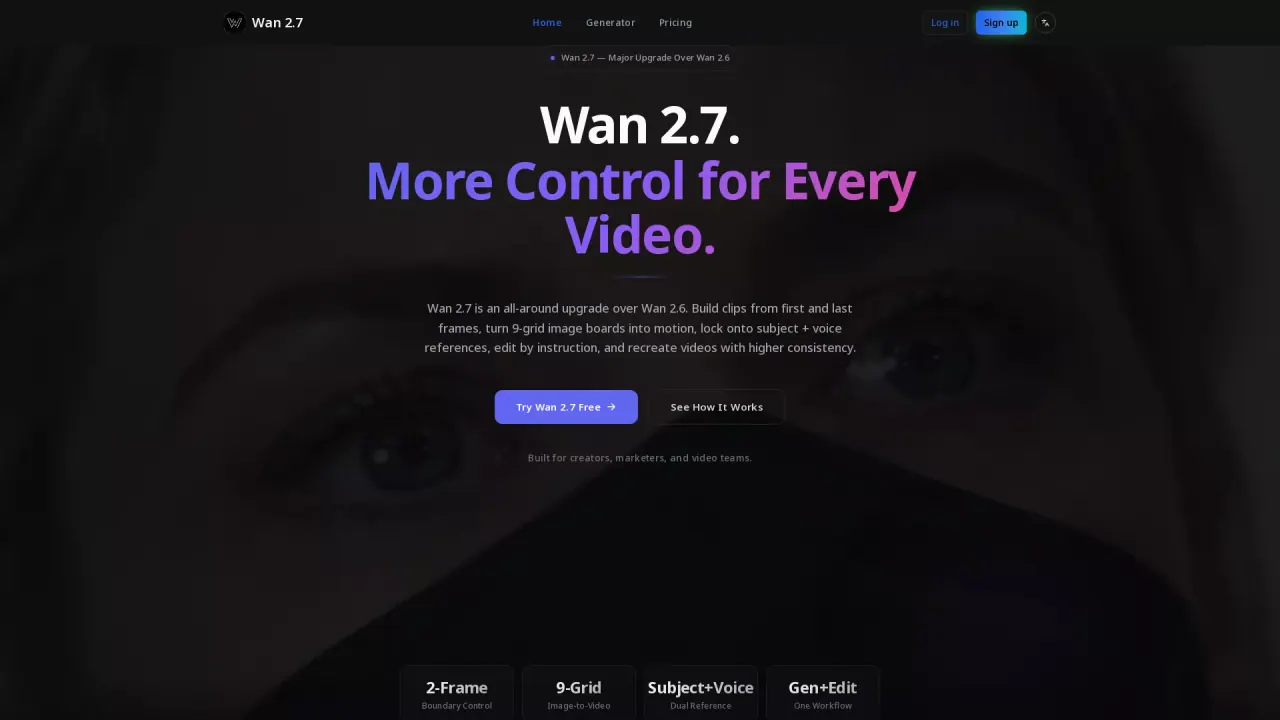
Wan 2.7 is a controllable AI video workflow and major upgrade over Wan 2.6, designed for creators who need more structure than plain text-to-video. Instead of relying on open-ended prompts alone, it lets you define clear shot boundaries and guide the result through a more repeatable generation-and-edit loop.
The core workflow supports first-frame & last-frame generation, helping you set where a clip starts and where it lands. It also includes 9-grid image-to-video for turning structured image boards into motion—useful for storyboards, concept testing, and product-style sequences. To keep identity and presentation stable across iterations, Wan 2.7 supports subject reference, and it can use subject + voice reference in the same workflow.
Beyond generation, Wan 2.7 supports instruction-based video editing so you can revise an existing clip with natural-language direction (scoped to action, camera, style, timing, and emphasis). It also offers recreation/replication workflows to rebuild a working result into new variants while preserving the original idea and performance direction—handy for versioning, iteration, and localized variants.
Wan 2.7 uses a freemium approach: you can start with free generations, and paid tiers include additional capabilities. For 720p or 1080p, pricing is billed per second.
What is Wan 2.7 best used for?
Wan 2.7 is best for structured video creation where you need clearer shot intent—using first/last-frame control, image-board motion, and consistent subject guidance across iterations.
Can I guide a clip by setting the first and last frames?
Yes. Wan 2.7 supports first-frame & last-frame generation so you can define where the clip begins and where it lands, making motion planning more predictable.
What does 9-grid image-to-video mean in Wan 2.7?
You can provide a 9-panel (9-grid) image board and turn it into a moving video. It’s designed for storyboard-driven ideation and concept testing before committing to full production.
How do subject and voice references work together?
Wan 2.7 supports subject reference to help keep visual identity stable, and it can pair that with voice reference so the clip stays closer to both the targeted look and vocal style.
How does instruction-based video editing differ from starting over?
Instead of rebuilding from scratch, you can revise an existing clip with direct instructions—focused on action, camera, styling, pacing, or emphasis—so the output stays closer to the original intent.
Is Wan 2.7 free to try, and how is pricing billed?
Wan 2.7 offers free generations without a credit card. For 720p or 1080p, pricing is billed per second.
This listing is claimed
Own Wan 2.7? Sign in with the email used to claim it to manage this listing, or upgrade to Pro for featured-first placement and a newsletter feature.