
OpenSEO
AI SEO Tool
AI-powered tool for fast, clean SEO articles, titles, outlines, and multilingual content.
Promoted


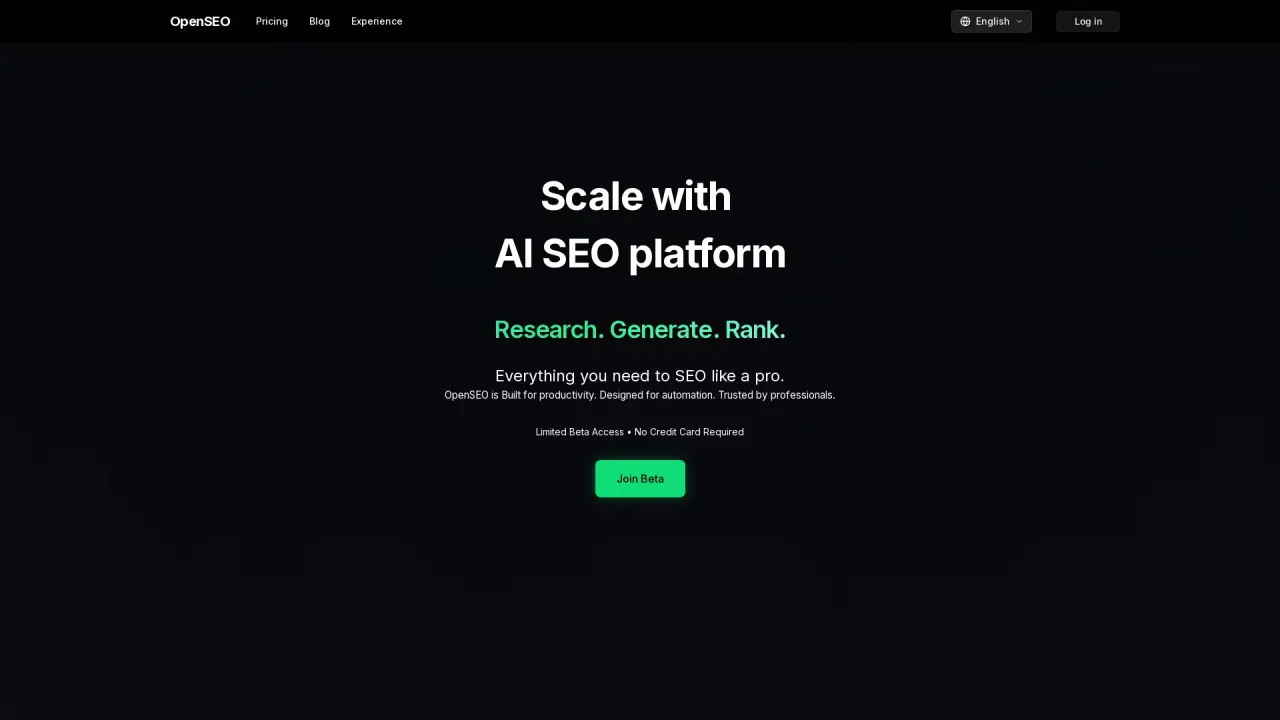
What does OpenSEO do?
What is the main use case for OpenSEO?
The primary purpose of OpenSEO is to help users generate structured, search-optimized content such as articles, titles, outlines, and multilingual text. It provides a clean workflow that focuses on clarity, SEO logic, and high-quality content creation.
Who is the target audience of open-seo.top?
The target users of OpenSEO include content creators, bloggers, SEO professionals, digital marketers, small business owners, and anyone who needs to produce high-quality SEO content quickly and efficiently.
Can a user use OpenSEO for free?
For now is beta testing, so the answer is yes
How does OpenSEO improve content ranking potential?
OpenSEO improves content ranking potential by utilizing advanced SERP analysis and content gap identification. It examines top-ranking factors such as content length, code examples, and mobile optimization to ensure your content is fully optimized for maximum search visibility. The platform identifies opportunity gaps, such as underused keywords, to strategically deploy content that ranks highly.
What are the key benefits of using OpenSEO for content creation?
OpenSEO offers several benefits for content creation, including AI-powered keyword research, intelligent intent analysis, and automated SEO enrichment. It provides data-driven SEO blueprints for structuring content strategies and a fine-tuned content engine to maintain brand voice and optimize for search performance. Additionally, OpenSEO significantly reduces content creation time, increasing productivity and efficiency.
Is OpenSEO suitable for global SEO strategies?
Yes, OpenSEO is highly suitable for global SEO strategies due to its advanced geo-targeting and localization features. It supports multiple languages, currency adaptation, and cultural optimization to expand reach effectively in target markets such as the United States, United Kingdom, Germany, and Japan. The platform enables businesses to optimize content for global audiences while maintaining high search visibility.
This listing is claimed
Own OpenSEO? Sign in with the email used to claim it to manage this listing, or upgrade to Pro for featured-first placement and a newsletter feature.