
Outcomet
AI Productivity Tools
Outcomet turns clustered customer themes into build/validate/fix decisions—keeping the evidence and linking it to delivery.
- Pricing
- Free
- Category
- Productivity
- Listed
- Jul 16, 2026
- Updated
- Jul 17, 2026
Promoted
 Sidrune AI85% off. Stable Claude API for agent developers. Pay as you go. Invoices & refunds available.
 Pixmax.aiPixmax.ai is an all-in-one AI workspace for videos, visual stories, and marketing content.
 RewindType any X/Twitter handle. Get their year back as a narrated video story. Then ask it anything.
 KurodyneSell the tools from your AI side projects. Listing is free.
 SEOify - Improve your SEO & rankingsBuild links to rank in Google. Improve your DR with links you can start building now.Advertise here270,000+ people visit Dang.ai every month.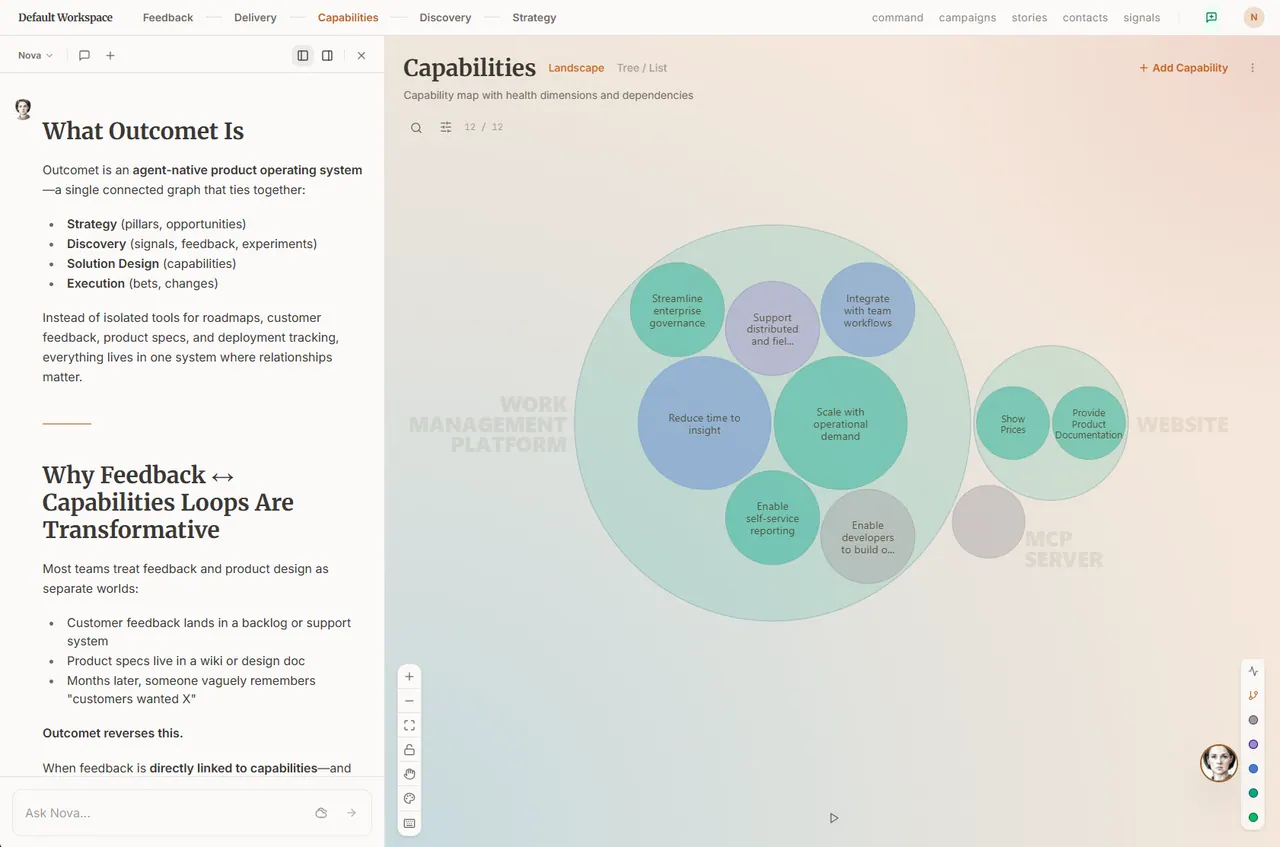
What does Outcomet do?
Outcomet helps product leaders decide what to build next with evidence attached—so the “why” behind your roadmap doesn’t disappear after release.
It brings dispersed product signal (feedback, calls, and tickets) into one place, automatically clustering it into themes. Each theme becomes a concrete build/validate/fix decision, with the rationale recorded as you decide—not rebuilt later from memory.
Outcomet keeps that decision connected to execution by linking it to Jira, Linear, and GitHub. When someone asks “why this?”, you can trace the evidence and the decision back to what shipped, and what it affected.
How does Outcomet decide what we should build next?
Outcomet clusters your customer signal into themes, then turns each theme into a build, validate, or fix decision with the evidence attached.
What does Outcomet mean by “evidence,” and how is it preserved?
The signals that justify a decision are attached to the decision as you make it, and remain connected through decision history so you can defend the “why” later.
Does Outcomet replace Jira, Linear, or GitHub?
No—Outcomet is not an issue tracker or roadmap tool. It links decisions to Jira, Linear, and GitHub so the “why” stays connected to delivery.
What’s the difference between Outcomet and a roadmap prioritization tool?
Roadmap tools organize features or backlogs, but Outcomet focuses on making the call: capturing the decision itself and the evidence behind it.
What kind of teams is Outcomet built for?
It’s designed for product leaders at B2B SaaS teams where signal is spread across systems and there’s enough process to feel the cost of losing product reasoning.
This listing is claimed
Own Outcomet? Sign in with the email used to claim it to manage this listing, or upgrade to Pro for featured-first placement and a newsletter feature.