
Auphonic
AI Audio Post Production
Transform your audio with AI-powered post production. Get the best sound quality for your podcasts, audiobooks, and more.
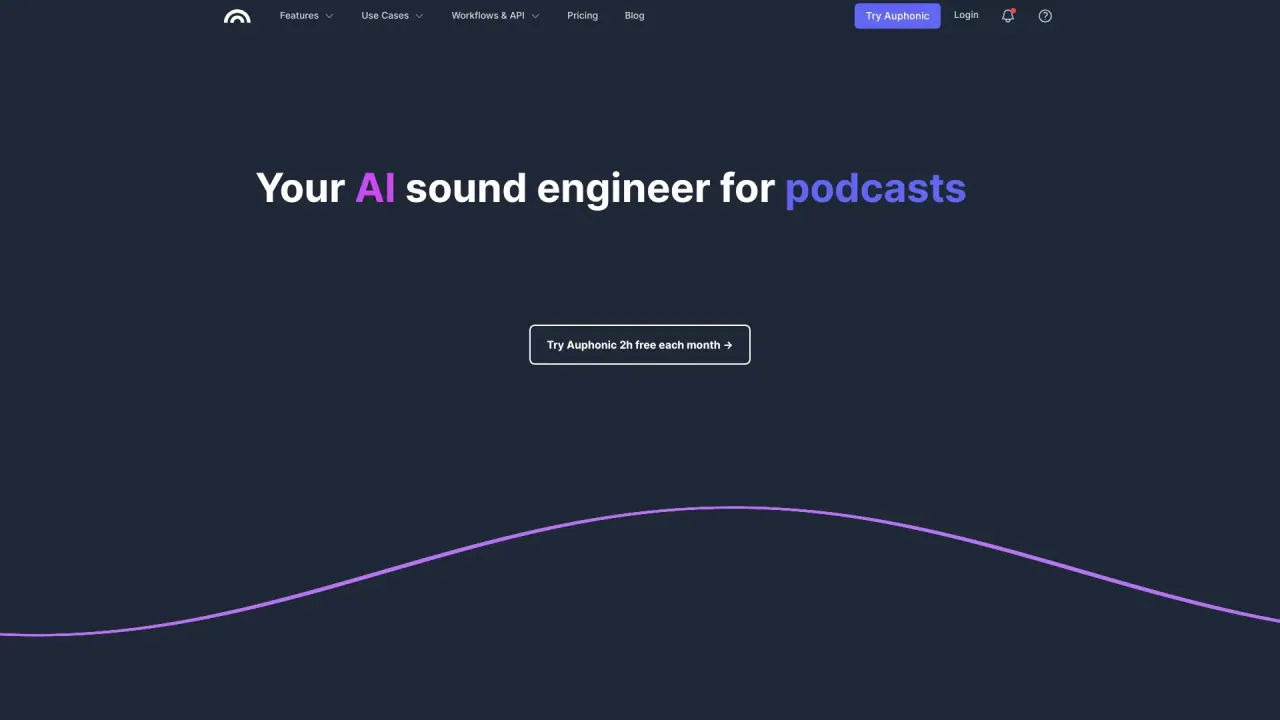
What does Auphonic do?
What audio processing features does Auphonic offer?
Auphonic provides a comprehensive set of tools to improve audio quality:
- Noise & Reverb Reduction: removes static and, if desired, fast-changing noises while managing music.
- Intelligent Leveler: balances levels between speakers, music, and speech without compressor expertise.
- Filtering, AutoEQ & BWE: adds missing frequencies and removes unwanted ones (De-Esser, De-Plosive, etc.) for a clear, warm sound.
- Cut Filler Words, Coughs and Silence: automatically removes silent segments, pauses, coughs, and filler words in multiple languages.
- Multitrack Algorithms: processes multiple tracks for an optimized mixdown with automatic ducking, noise gate, and mic bleed removal.
- Loudness Specifications: set target loudness, true peak limit, MaxLRA, and more for consistency and compliance.
- Speech2Text & Automatic Shownotes: multilingual speech-to-text with auto-generated shownotes and chapters, plus a shareable transcript editor.
- Video Support, Metadata & Chapters: enhanced audio or video podcasts with chapters and waveform audiograms.
- Automated Workflows & API Integrations: automatic content deployment and integrations to streamline publishing and workflows.
- Publishing & Integrations: publish results automatically to platforms like YouTube, Libsyn, PodBean, Soundcloud, and Facebook; plus watch folders, Zapier, and API for broader automation.
- White Label API & Customization: integrate Auphonic into your own products with custom algorithms and pricing.
How can I publish or deploy my processed audio?
Auphonic can automatically deploy your results to multiple platforms and services, including YouTube, Libsyn, PodBean, Soundcloud, and Facebook. You can also use watch folders, the Auphonic API, and Zapier to integrate publishing into your existing workflows. There is also a White Label API and customization option for deeper, product-level integrations.
What use cases or industries is Auphonic designed for?
Auphonic supports:
- Podcasting: one-click audio enhancement for compelling podcasts.
- Educational Content: improve lecture recordings and learning materials.
- Video Creation: ensure high-quality sound in video projects.
- Audiobooks: optimize audio quality for narration and production.
These use cases reflect Auphonic’s broad applicability to podcasts, education, video, and long-form audio content.
Is there a free tier, and how much can I use for free?
Yes. Auphonic offers a free tier with 2 hours of processed audio per month.
Do I need to install any software to use Auphonic?
No. Auphonic is a web-based service. You can upload files directly in your browser, or use the API and workflows to integrate it into your applications.
How can I integrate Auphonic with other tools and platforms?
Auphonic supports:
- API access for programmatic use.
- Zapier for automated workflows.
- Watch folders for automated processing.
- White Label API and customizations for embedding Auphonic into your own products.
- External service integrations for broader automation.
Can Auphonic transcribe audio and generate shownotes?
Yes. Auphonic includes Speech2Text with multilingual support and automatic shownotes, along with chapters and a transcript editor for easy review and sharing.
Does Auphonic support video projects or video metadata?
Yes. Auphonic offers Video Support, Metadata, and Chapters to create enhanced audio or video podcasts with chapters and waveform audiograms.
What loudness and metering controls can I set in Auphonic?
Auphonic lets you define Loudness Specifications, including target loudness, true peak limits, and MaxLRA, to ensure consistency across files and compliance with audio specs.
Does Auphonic support multi-track processing?
Yes. Multitrack Algorithms process multiple tracks to deliver an optimized mixdown, including automatic ducking, a noise gate, and mic bleed removal.
Can I customize processing or use a white-label API?
Yes. Auphonic offers a White Label API and customization options to integrate its processing into your own workflows, platforms, or products with bespoke pricing and algorithm choices.
Where can I find updates and the changelog?
Auphonic maintains a changelog with featured updates and improvements. You can review changes to denoising, mic handling, two-factor authentication, and other enhancements.
Is this your tool?
Claim Auphonic to manage this listing, or upgrade to Pro for featured-first placement and a newsletter feature.