
SkinCareLens
Korean Skin Care Analysis
AI analyzes 14+ skin concerns and recommends custom Korean skin care routines
Promoted
 Sidrune AI85% off. Stable Claude API for agent developers. Pay as you go. Invoices & refunds available.
 Pixmax.aiPixmax.ai is an all-in-one AI workspace for videos, visual stories, and marketing content.
 RewindType any X/Twitter handle. Get their year back as a narrated video story. Then ask it anything.
 KurodyneSell the tools from your AI side projects. Listing is free.
 SEOify - Improve your SEO & rankingsBuild links to rank in Google. Improve your DR with links you can start building now.Advertise here270,000+ people visit Dang.ai every month.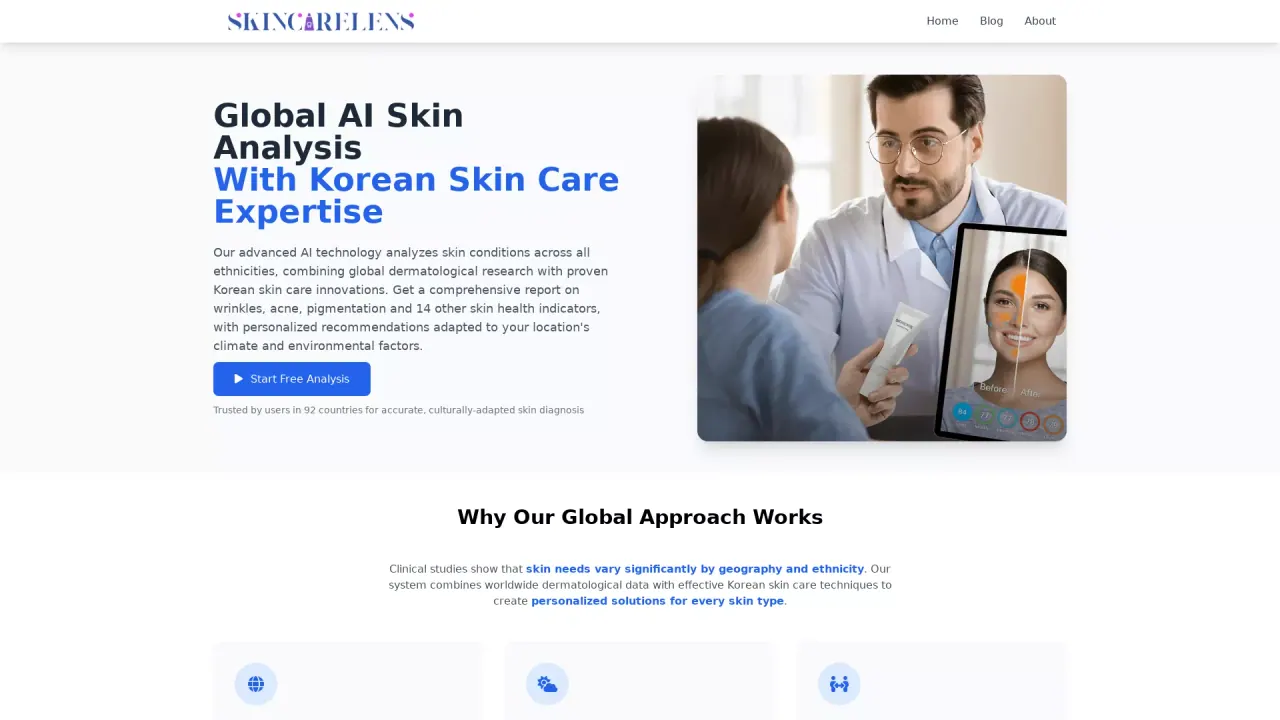
What does SkinCareLens do?
Is SkinCareLens suitable for all ethnicities, and can Korean skin care be beneficial for non-Asian skin?
Yes. SkinCareLens offers ethnic-inclusive analysis and can apply Korean skin care methodologies when requested. It recognizes diverse skin types (African, Asian, Caucasian, Hispanic) and 62% of non-Asian users incorporate some Korean products into their routines.
How does SkinCareLens incorporate Korean skin care into its AI analysis?
SkinCareLens integrates Korean skin care methods by focusing on hydration mapping, layered care, and preventive measures. It uses a 12-zone moisture analysis alongside predicting trans-epidermal water loss (TEWL), while its layered care advice identifies needs for essences and serums and plans multi-step routines. Preventive care aims for early wrinkle detection and pore elasticity scoring, contributing to about 23% more accurate hydration recommendations than standard analyses.
What are the specialized features of SkinCareLens for different ethnic skin types?
The AI is trained on 2.7 million skin images from 38 countries, representing diverse ethnic groups. It recognizes unique skin needs across African, Asian, Caucasian and Hispanic populations and can apply Korean skin care methodologies when requested. It also provides geo-adaptive recommendations by suggesting locally available products and Korean alternatives, with multilingual support in 14 languages.
How does SkinCareLens adapt its recommendations to different climates and environments?
Recommendations are tailored using climate factors such as humidity levels, average UV index, and pollution exposure, and are adjusted for local product availability and beauty standards. Cultural preferences and optional Korean skin care imports are also considered to ensure regionally appropriate guidance.
Does SkinCareLens provide geo-adaptive recommendations (local products) and Korean alternatives when beneficial?
Yes. SkinCareLens suggests locally available products and highlights effective Korean skin care alternatives when beneficial for your skin condition.
How many skin metrics does SkinCareLens analyze, and what areas does it cover?
SkinCareLens analyzes 16 skin metrics using global dermatological standards. It assesses conditions such as wrinkles, acne, and pigmentation, plus 14 other indicators, supported by a 12-zone moisture analysis and TEWL modeling to gauge moisture and barrier health.
Where does the AI get its training data?
SkinCareLens is trained on about 2.7 million images total: 1.2 million from global dermatology clinics, 850,000 from research partnerships with 28 universities worldwide, and 650,000 from Korean skin care research centers. The data is balanced across skin types aged 18–75.
In what languages is SkinCareLens available?
SkinCareLens offers multilingual support in 14 languages, including English, Korean, Japanese, Chinese (Simplified and Traditional), Spanish, French, German, Portuguese, Dutch, Swedish, Greek, Norwegian, and Arabic.
What are the steps to get a personalized analysis?
- Upload a clear frontal facial photo (natural lighting recommended). 2) Run the AI analysis to evaluate 16 skin metrics. 3) Receive Get Custom Recommendations that combine global dermatology with Korean skin care innovations where scientifically appropriate for your skin needs.
Is there a free option to start with?
Yes—SkinCareLens offers a Start Free Analysis option, allowing you to begin with a free analysis.
Is SkinCareLens a substitute for professional medical advice?
SkinCareLens combines global dermatological research with Korean skin care innovations to provide personalized skincare recommendations. It is not a substitute for professional medical advice.
What makes Korean skin care analysis different from traditional methods?
Korean skin care analysis emphasizes Hydration Mapping (12-zone moisture analysis and TEWL), Layered Care (identifying needs for essences/serums and planning multi-step routines), and Preventive Care (early wrinkle detection and pore elasticity scoring). This approach can yield about 23% more accurate hydration recommendations than standard analyses.
Do you recommend specific Korean skin care products?
The system suggests product types rather than brands, including:
- pH-balanced cleansers (pH 5.5–6.0)
- Fermented essences with 2%+ galactomyces
- Cushion-type SPF with PA++++
- Sheet masks made with cellulose fiber
It also considers compatibility with ingredients like centella asiatica and propolis extract.
How should I optimize my photos for the analysis?
For best results: use natural daylight or a flash, ensure full-face framing (chin to forehead) with at least 400px of face width/height, remove makeup and skincare products for true skin assessment, and capture both front and side angles if analyzing concerns like jawline hydration. These guidelines align with Korean skin care research standards.
This listing is claimed
Own SkinCareLens? Sign in with the email used to claim it to manage this listing, or upgrade to Pro for featured-first placement and a newsletter feature.