
Hydrostatic Pressure Calculator
AI Finance Modeling Tools
Free hydrostatic pressure calculator that computes bottom-hole pressure from mud weight and TVD in imperial and metric units.
- Pricing
- Free
- Category
- Finance
- Listed
- Jun 7, 2026
- Updated
- Jun 8, 2026
Promoted
 Sidrune AI85% off. Stable Claude API for agent developers. Pay as you go. Invoices & refunds available.
 Pixmax.aiPixmax.ai is an all-in-one AI workspace for videos, visual stories, and marketing content.
 RewindType any X/Twitter handle. Get their year back as a narrated video story. Then ask it anything.
 KurodyneSell the tools from your AI side projects. Listing is free.
 SEOify - Improve your SEO & rankingsBuild links to rank in Google. Improve your DR with links you can start building now.Advertise here270,000+ people visit Dang.ai every month.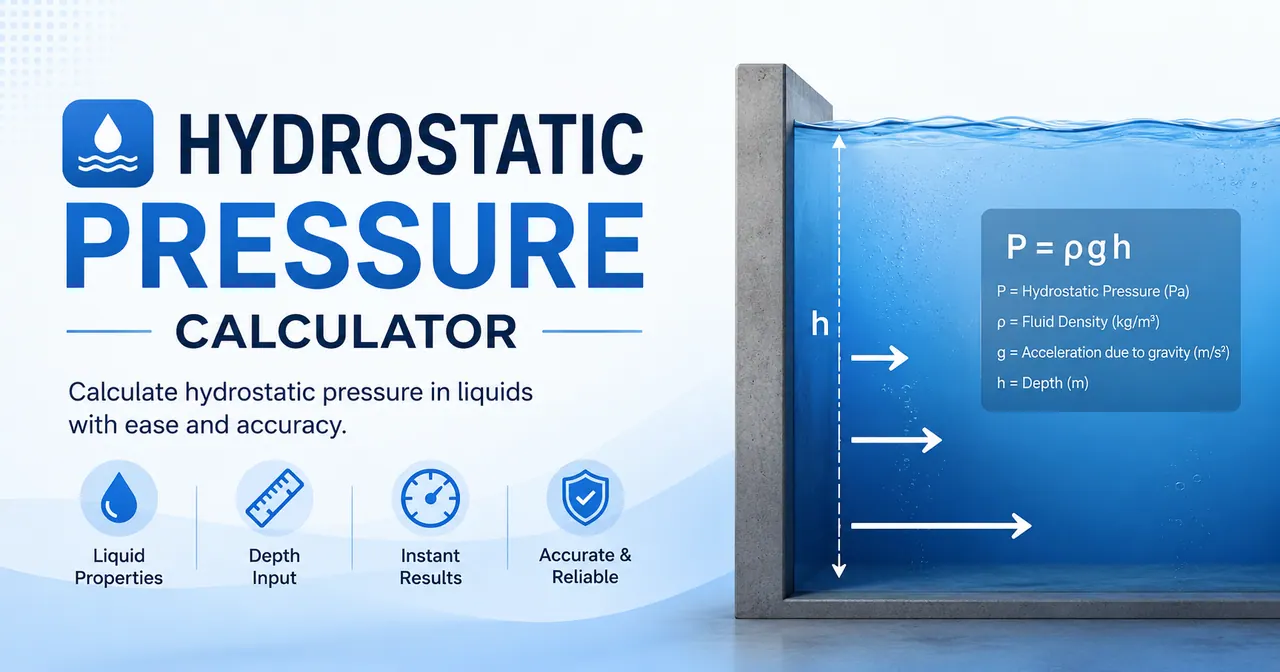
What does Hydrostatic Pressure Calculator do?
Calculate hydrostatic pressure quickly for drilling and mud engineering workflows using mud weight (fluid density) and true vertical depth (TVD). The calculator supports imperial (ppg/ft/PSI) and metric (g/cc/m/kPa) inputs, and shows the pressure gradient output.
Use the standard drilling-rig hydrostatic pressure relationship: HP (psi) = 0.052 × Mud Weight (ppg) × TVD (ft). The constant 0.052 is included as the unit conversion factor for common US field units.
Hydrostatic pressure helps support well control decisions (maintaining overbalance against pore pressure), reduce risk related to lost circulation (staying below fracture gradient), guide casing shoe depth checks, and inform kill operation calculations after a kick.
What inputs do I need to calculate hydrostatic pressure?
Enter mud weight (fluid density) and true vertical depth (TVD). The calculator then computes hydrostatic pressure at that depth and provides pressure gradient output.
What is the hydrostatic pressure formula this calculator uses in imperial units?
HP (psi) = 0.052 × Mud Weight (ppg) × TVD (ft). The 0.052 factor converts mud weight and depth into PSI for standard US field units.
What is the metric hydrostatic pressure formula?
HP (kPa) = 9.81 × ρ (g/cc) × TVD (m). A related bar form is HP (bar) = 0.0981 × ρ (g/cc) × TVD (m).
How do I interpret the pressure gradient output?
Pressure gradient is expressed as PSI per foot of depth (Gradient (PSI/ft) = 0.052 × MW (ppg)). It helps compare drilling-fluid pressure levels against pore pressure and fracture gradient.
Why does hydrostatic pressure calculation matter for drilling operations?
It supports well control by helping maintain overbalance, helps manage lost-circulation risk by relating to fracture gradient, and assists with casing and kill-mud depth/weight calculations.
Is this calculator meant for final well control decisions?
Use it for educational calculations, but always verify critical well control calculations with a certified well control specialist.
This listing is claimed
Own Hydrostatic Pressure Calculator? Sign in with the email used to claim it to manage this listing, or upgrade to Pro for featured-first placement and a newsletter feature.